Design That Guides Movement: How Mulia Bali’s Layout Encourages Calm and Flow
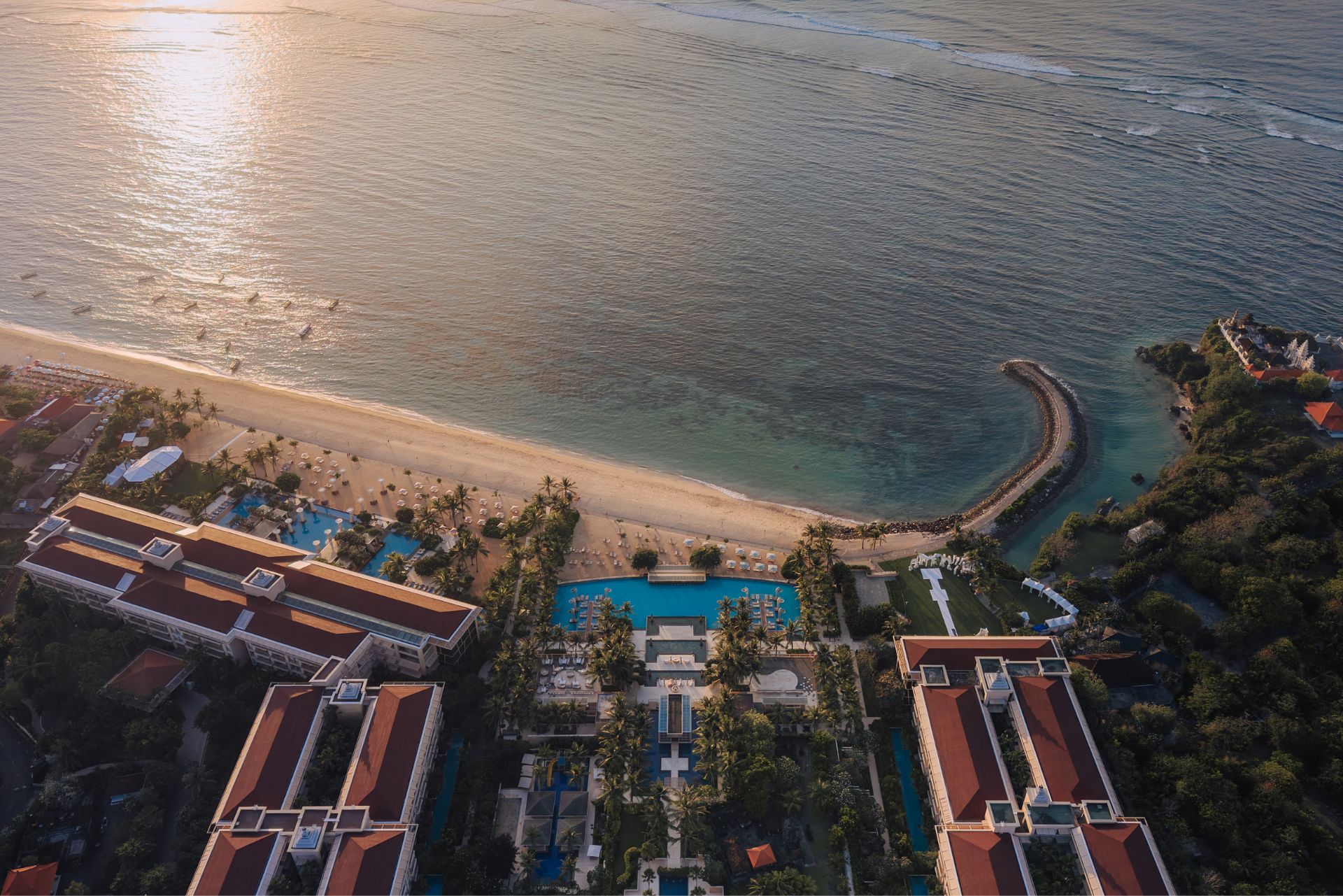
How Mulia Bali’s Design Creates a Natural Sense of Flow
At Mulia Bali, movement is part of the experience. Open spaces, gardens, and ocean-facing design guide guests naturally, creating a sense of calm and effortless flow.
The experience of a resort is shaped not only by what guests see, but by how they move through its spaces. At Mulia Bali, the overall resort layout was designed to create a natural rhythm between arrival, gathering, rest, and quiet reflection.
Rather than directing guests through enclosed corridors or rigid pathways, the resort’s architecture and design encourages gradual transitions between open courtyards, gardens, dining spaces, pools, and private accommodations. The result is an environment where movement feels intuitive and unhurried.
Architecture Oriented Toward the Ocean
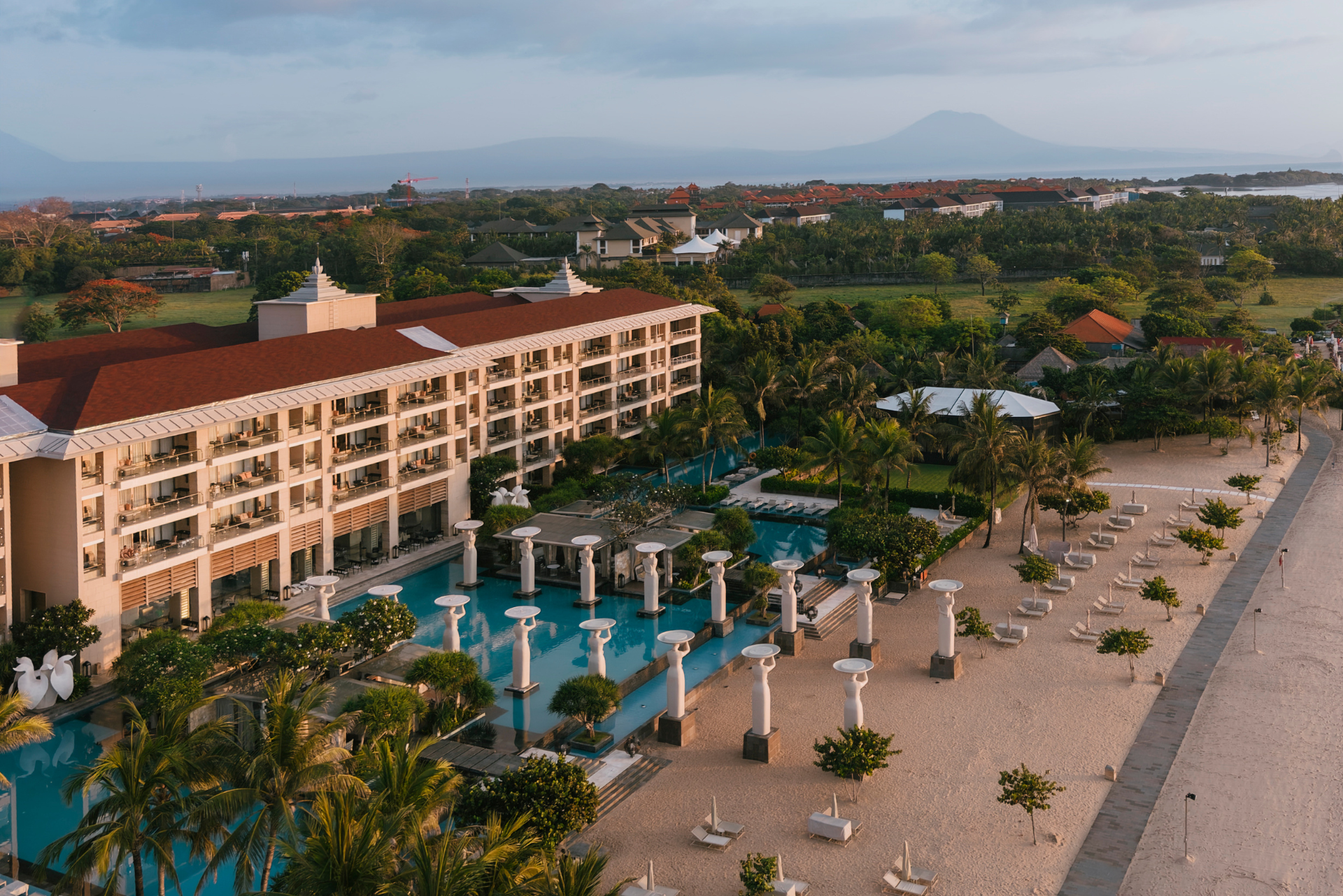
From the main arrival areas to the beachfront, Mulia Bali’s design maintains a strong visual connection to the sea. Wide walkways, open courtyards, and expansive terraces allow guests to orient themselves easily while moving through the property.
This architectural planning creates a sense of clarity and direction. Guests are rarely confined to narrow interior corridors; instead, movement unfolds through a series of open spaces where natural light, ocean breezes, and surrounding gardens remain present.
The layout supports both exploration and ease of navigation, allowing guests to move between restaurants, pools, and accommodation areas without feeling crowded or constrained.
Climate-Responsive Architecture
.webp)
Several architectural elements draw inspiration from traditional Southeast Asian architecture and Balinese design, where buildings are shaped by climate as much as aesthetics.
High ceilings and open structures allow air to circulate naturally, helping maintain comfort in a tropical environment. Buildings are spaced apart rather than tightly clustered, allowing wind and light to move freely through the resort grounds.
This approach mirrors the structure of traditional Balinese compounds, where separate pavilions are arranged around open courtyards to encourage airflow, shade, and connection with nature in Bali.
Gardens and Outdoor Pathways
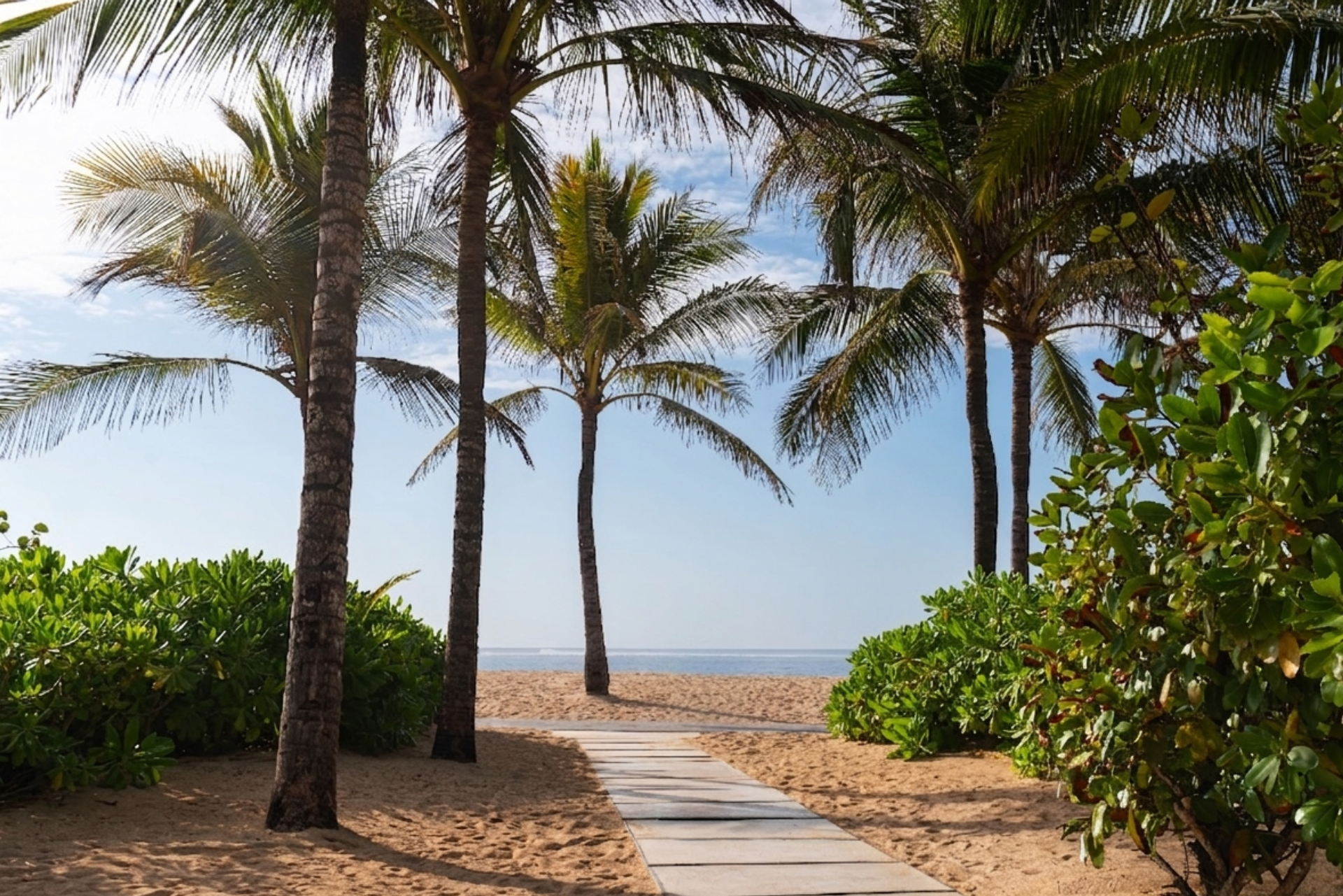
Much of the movement across the resort happens outdoors. Landscaped pathways connect restaurants, pools, and gathering spaces through gardens and water features rather than enclosed hallways.
These transitions help soften the shift between different parts of the resort environment. A walk to breakfast or an evening restaurant reservation becomes part of the overall experience, as guests pass through greenery, water elements, and open-air spaces.
The design encourages guests to remain connected to the natural surroundings rather than moving quickly between isolated buildings.
Symbolism in Water and Sculpture
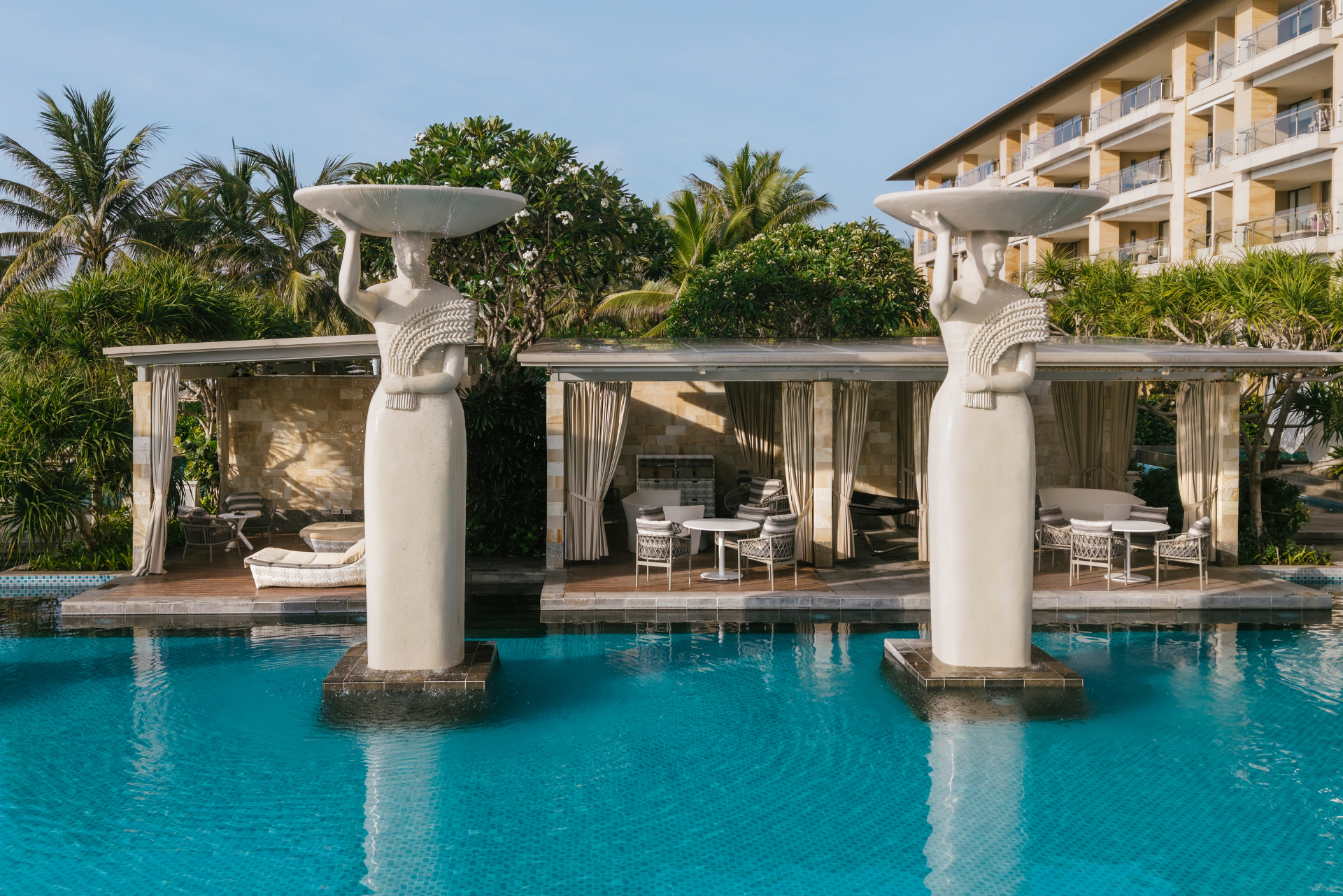
Water plays an important role throughout the Mulia Bali landscape design. Flowing pools, fountains, and reflective surfaces create continuity between spaces while contributing to a calm atmosphere.
Several sculptural elements also reflect Balinese cultural symbolism rooted in Balinese traditions. Statues inspired by Dewi Danu, the goddess associated with water and fertility, appear within the resort’s landscape. In Balinese belief, water represents life, purification, and balance.
Other figures evoke the image of Balinese ceremonial processions, where women carry offerings during temple rituals. These forms subtly reference the rhythms of local Balinese culture without dominating the environment.
Balance and Numerical Harmony
Certain elements of the resort’s architectural design also reflect broader principles of spatial harmony. In some areas, symmetry, axial alignment, and the repetition of specific numbers are used to create visual balance.
For example, decorative elements such as chandelier arrangements incorporate the number eight, a number often associated with prosperity and continuity in Asian design traditions.
While these details are subtle, they contribute to an overall sense of order and flow across the property.
A Resort Designed for Flow
.png)
At Mulia Bali, architecture, landscape design, and cultural symbolism come together to create an environment where movement feels natural. Open sightlines guide guests toward the ocean, gardens soften transitions between spaces, and water features connect different parts of the resort.
These elements work quietly in the background, shaping the guest experience without demanding attention.
For guests, the result is simple: a luxury resort in Bali that feels spacious, calm, and easy to navigate, where the resort layout and design itself contributes to a sense of balance and ease.